
Another useful strategy is to avoid eating large meals shortly before going to bed.
Elevating the upper body can also help some people with nighttime reflux.
If reflux happens frequently, causes significant discomfort, or interferes with sleep, it is worth discussing with a healthcare professional.
6. Sleeping During Pregnancy
During pregnancy, comfort and safety become especially important.
Side sleeping is commonly recommended during later pregnancy, particularly because lying flat on the back for prolonged periods may become uncomfortable and can affect blood flow.
Many pregnant people find that sleeping on the side with a pillow between the knees or using a pregnancy pillow provides additional support.
Pregnancy is different for every person, so individual medical advice should take priority.
7. Choosing the Right Pillow
Your sleeping position is only one part of the equation.
The pillow also plays an important role.
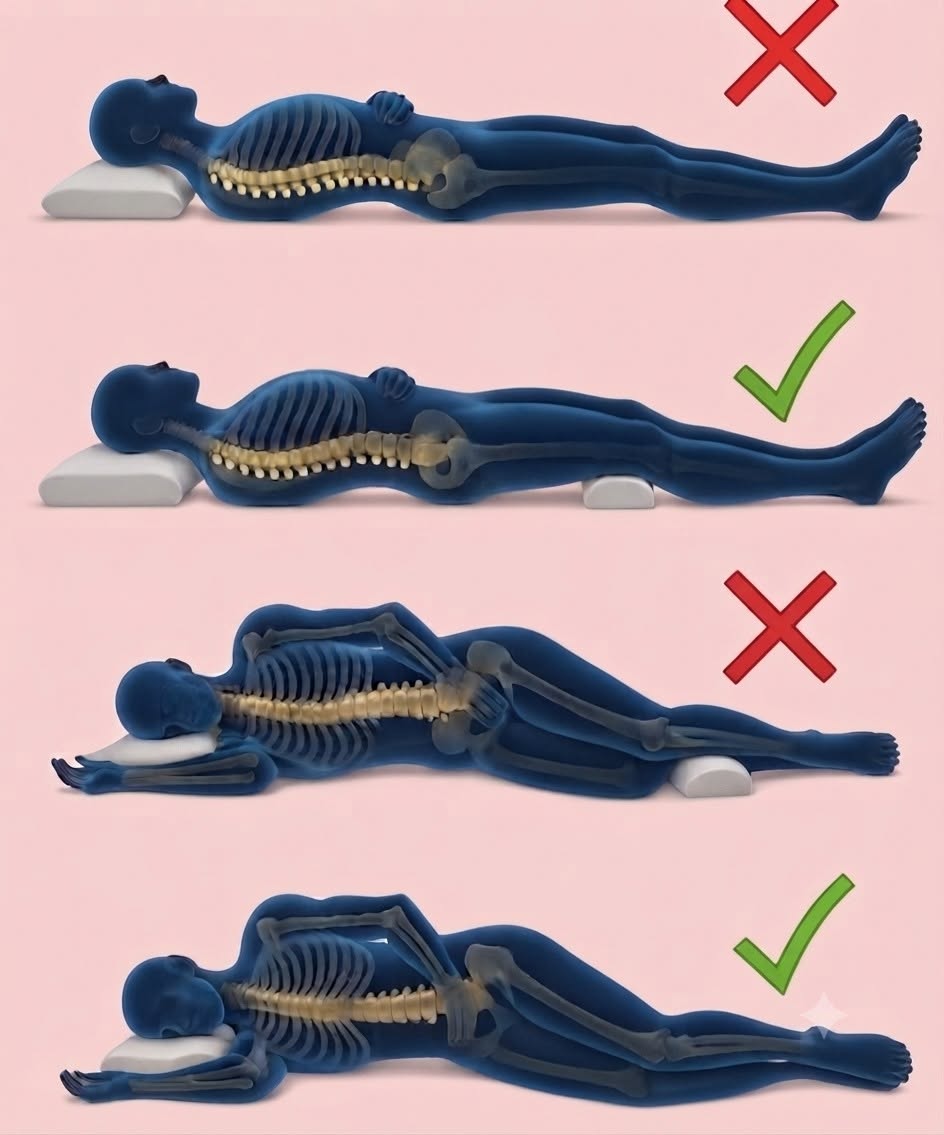
A pillow should support your head and neck without forcing them too far upward or downward.
Side sleepers generally need a thicker pillow than stomach sleepers because the shoulder creates more distance between the head and the mattress.
Back sleepers often benefit from a medium-height pillow that supports the natural curve of the neck.
Stomach sleepers may be more comfortable with a very thin pillow or, in some cases, no pillow under the head.


