
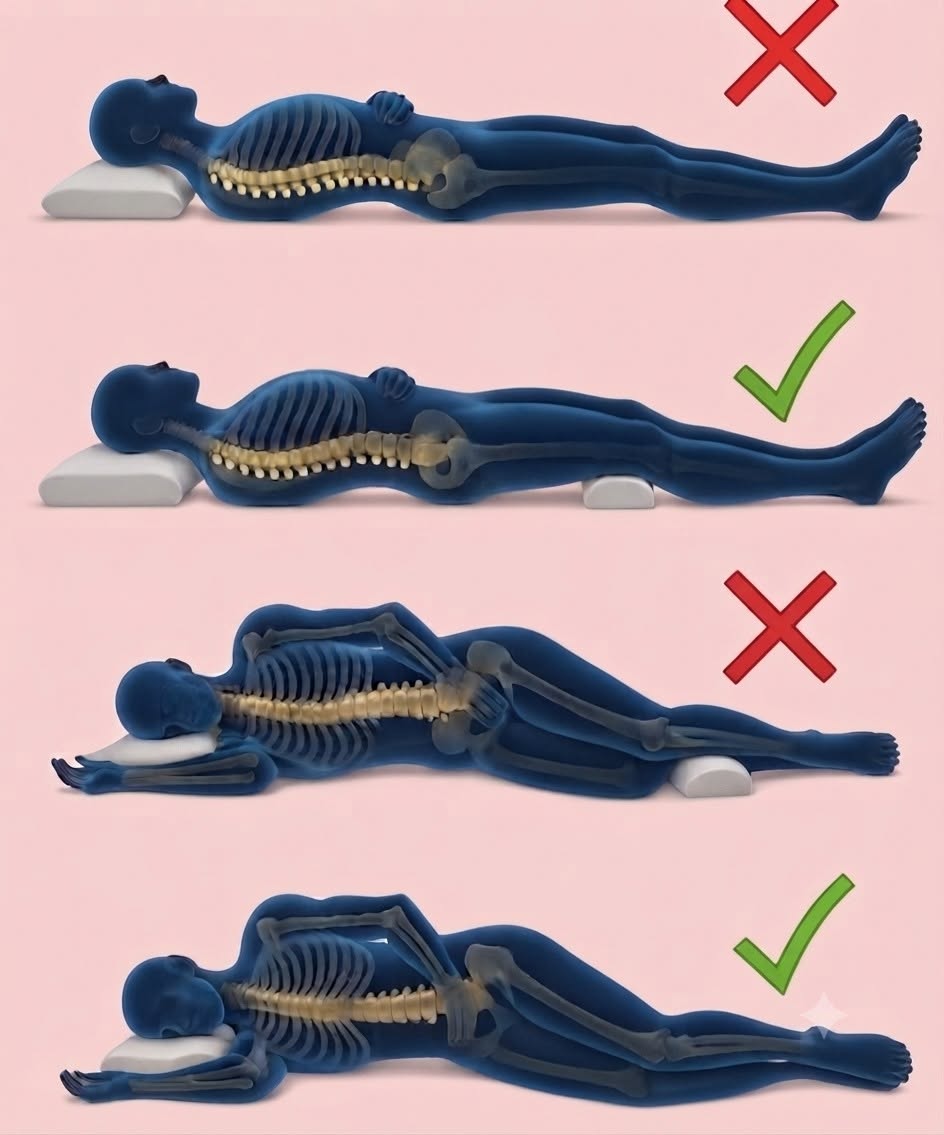
Your goal should not be to find a “perfect” position.
The goal is to find a position that supports comfortable, uninterrupted sleep.
When Should You Talk to a Doctor?
Sleeping position can influence certain symptoms, but it should not be used to diagnose a medical condition.
Speak with a healthcare professional if you regularly experience:
- Loud or persistent snoring
- Pauses in breathing during sleep
- Waking up choking or gasping
- Severe or persistent pain
- Significant daytime sleepiness
- Frequent nighttime acid reflux
These symptoms can sometimes indicate an underlying condition that requires treatment.
The Bottom Line
There is no single sleeping position that is best for everyone.
Side sleeping may be helpful for some people with snoring, certain breathing problems, or nighttime acid reflux.
Back sleeping can support a neutral spinal position for some people, but it may worsen snoring or obstructive sleep apnea.
Stomach sleeping may reduce snoring for some people but can place additional strain on the neck and back.
Ultimately, the best sleeping position is the one that allows you to breathe comfortably, minimizes pain, supports your body, and helps you get restorative sleep.
Small changes to your sleeping position, pillow, or mattress may improve comfort, but persistent symptoms should be evaluated by a healthcare professional.


