
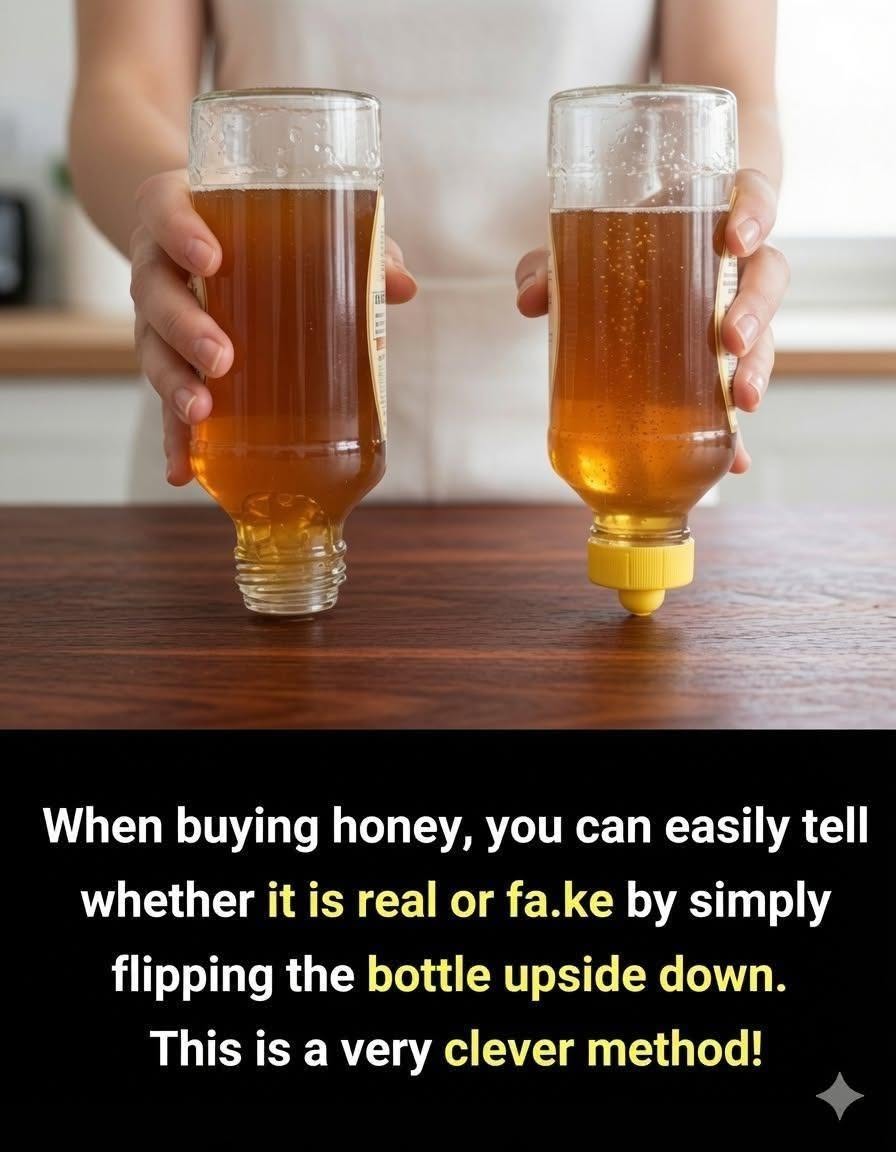
That’s not true.
Natural honey can crystallize, sometimes becoming thick, cloudy, or almost solid.
The process is influenced by the types and proportions of sugars in the honey, as well as temperature and storage conditions.
Crystallization does not automatically mean the honey has gone bad—or that it isn’t genuine.
If you prefer liquid honey, placing the container in warm water can help soften crystallized honey. Avoid overheating it, especially if preserving its natural characteristics is important to you.
The Bottom Line
Flipping a honey bottle upside down can be a fun experiment, but it shouldn’t be treated as proof that honey is real or fake.
Honey’s thickness and movement are influenced by temperature, moisture, floral source, crystallization, and other factors.
So the next time you see a viral claim saying that one simple trick can expose fake honey instantly, remember:
Real food often behaves more complicatedly than a viral video suggests.
Instead of judging honey by one bubble or how quickly it moves, check the label, consider where it came from, and choose products from trustworthy sources.
And if you already have a jar that crystallized in your kitchen, don’t throw it away just because it no longer looks like the honey you bought. In many cases, those crystals are simply a natural part of honey’s life.


