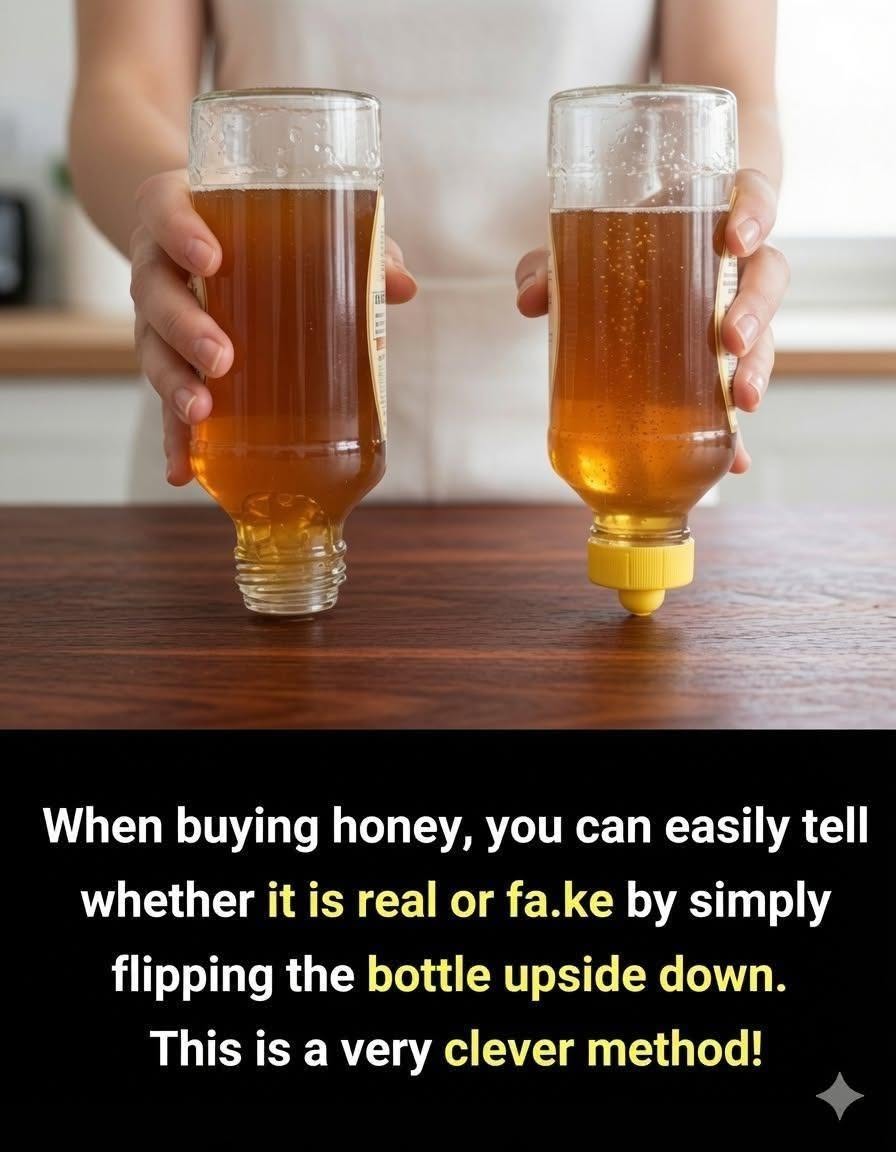
A fake or adulterated product could potentially behave similarly.
Why Internet Honey Tests Can Be Misleading
You may have also seen other homemade honey tests online.
Some involve dropping honey into water. Others involve using a match, paper, a spoon, or even your thumb.
These tricks can be entertaining, but most cannot definitively establish the composition or authenticity of honey.
A food product’s appearance and physical behavior can tell you something about its properties—but they don’t necessarily reveal everything that has been added to it.
So How Can You Buy Better Honey?
If you’re concerned about authenticity, the best approach is to focus on the information available on the product rather than relying on a single kitchen experiment.
Look at the ingredient list.
For a product sold simply as honey, you generally want honey to be the only listed ingredient.
Also pay attention to the producer, origin, labeling, and reputation of the seller.
Buying from a reputable beekeeper, cooperative, or established food producer can provide more confidence than relying on an internet trick.
For high-value purchases or situations where authenticity is especially important, laboratory analysis is far more reliable than a homemade test.
Don’t Be Afraid of Crystallized Honey
One common misconception is that real honey should always remain perfectly clear and liquid.