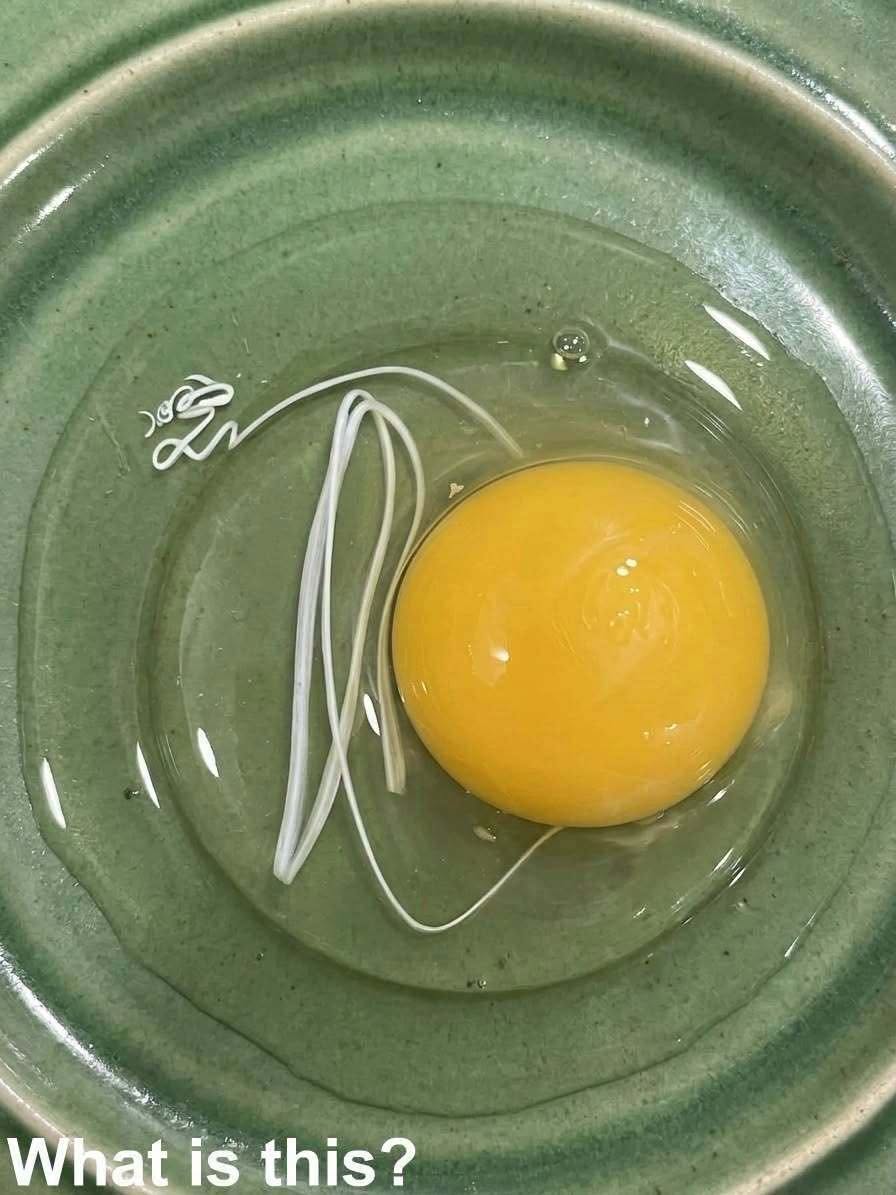
I Thought the White String in My Egg Was Something Dangerous—The Truth Completely Surprised Me

However, you shouldn’t use the chalaza alone to determine whether an egg is safe to eat.

Other factors, including proper storage, the expiration or best-before information, shell condition, smell, and cooking practices, are more important.

Should You Remove the Chalaza?

There’s generally no need to remove it.

The chalaza is edible and doesn’t pose a health risk simply because it looks unusual.

When you cook an egg, the chalaza may become less noticeable. In dishes where appearance matters, such as custards or some baked goods, you can strain the mixture if you want an especially smooth texture.

But for ordinary scrambled eggs, omelets, fried eggs, or boiled eggs, there’s no practical reason to worry about it.

Why Does the Yolk Need to Stay in Place?

The chalaza helps keep the yolk centered inside the egg.

Think of it as a natural suspension system.

An egg develops with the yolk surrounded by egg white, while the chalaza helps maintain its position. This structure also has a role in protecting the developing contents of a fertilized egg.

Even when the egg is simply being sold as food, these natural structures remain.

Does a Chalaza Mean the Egg Is Fertilized?

No.

Seeing a chalaza does not mean that the egg contains a developing chick.