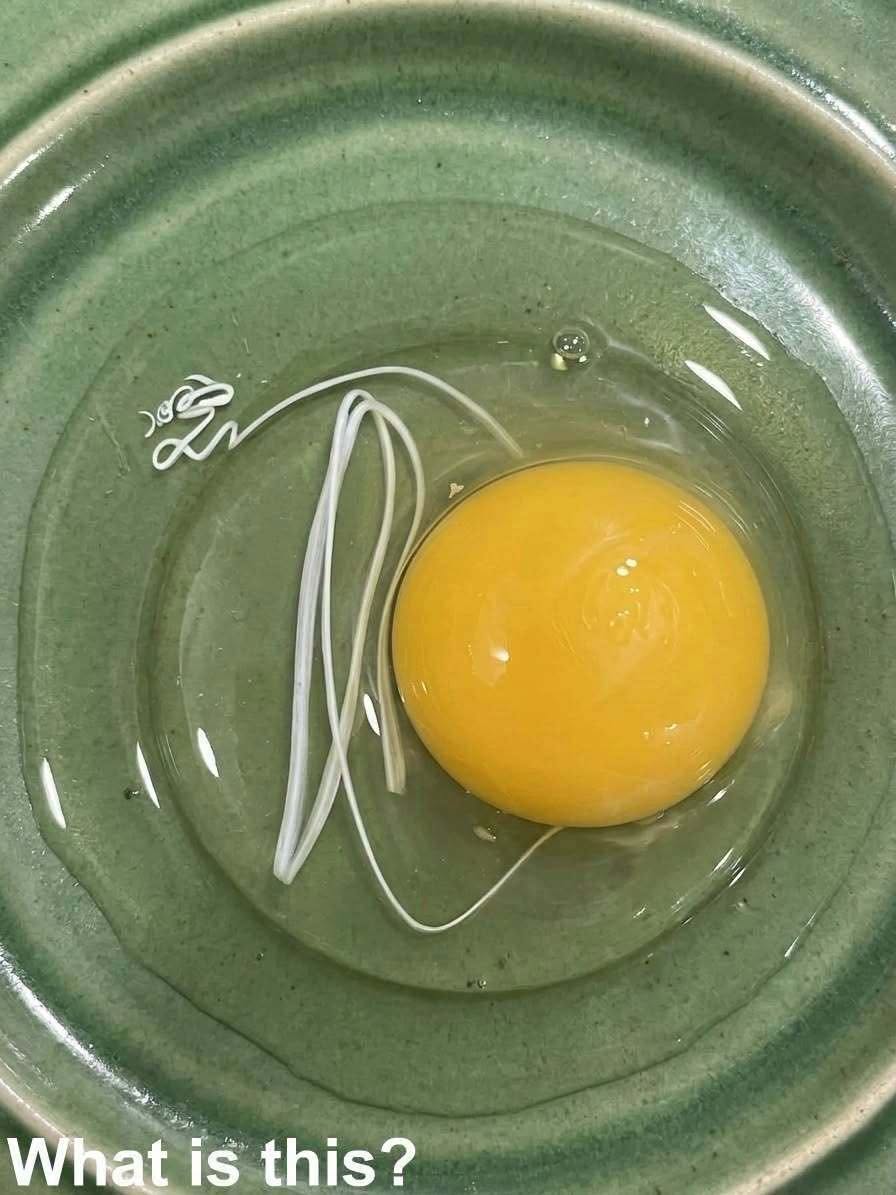
Commercial eggs are commonly unfertilized. The chalaza is simply a normal anatomical structure found in eggs regardless of whether fertilization has occurred.
What If the Egg White Looks Cloudy?
Another thing that can surprise people is cloudy egg white.
Cloudiness in a fresh egg can be associated with carbon dioxide that hasn’t yet escaped through the shell. It isn’t automatically a sign that the egg has gone bad.
As an egg ages, the white generally becomes clearer and thinner.
Again, appearance alone isn’t a perfect food-safety test.
When Should You Throw an Egg Away?
While a chalaza is normal, other warning signs deserve attention.
Don’t use an egg if the shell is badly cracked or contaminated, or if the egg has an obviously abnormal odor or appearance after cracking.
Proper refrigeration and handling are also important.
When in doubt about an egg’s safety, it’s better to discard it than take a chance.
How Should Eggs Be Cooked?
Eggs can carry harmful bacteria such as Salmonella, so proper cooking is important.
Cooking eggs until both the white and yolk are firm is one way to reduce the risk of foodborne illness.
People who are particularly vulnerable to foodborne infections should follow food-safety recommendations carefully and may need to avoid raw or undercooked eggs.