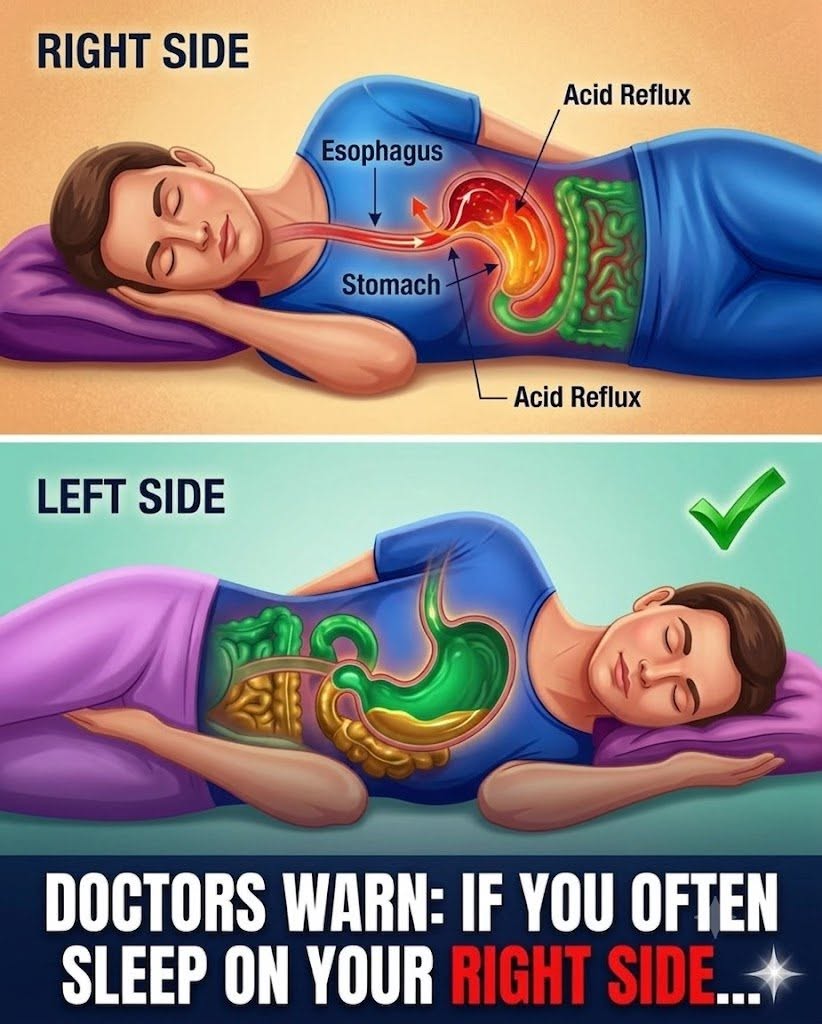
Doctors Warn: Your Sleeping Position May Affect Acid Reflux Symptoms

If you regularly experience nighttime heartburn, consider making your evening meal lighter and giving your stomach plenty of time to digest before bedtime.

Pay Attention to Your Personal Trigger Foods

Certain foods and drinks can aggravate reflux in some people.

Common examples include:

  • Fatty or fried foods
  • Spicy foods
  • Chocolate
  • Coffee and other caffeinated drinks
  • Carbonated beverages
  • Citrus products
  • Alcohol
  • Tomato-based foods

But there is no universal list that works for everyone. A food that causes symptoms for one person may not bother another.

Keeping track of what you eat and when symptoms appear can help you identify your own triggers.

Small Changes Can Make a Difference

If nighttime reflux is bothering you, you don’t necessarily need to change everything at once.

Start with a few practical steps:

1. Finish eating two to three hours before bed.

2. Try sleeping on your left side.

3. Elevate the head of your bed or use a suitable wedge.

4. Avoid foods and drinks that consistently trigger your symptoms.

5. Maintain a healthy weight if excess weight is contributing to reflux.

6. Avoid smoking.

These measures are part of the lifestyle strategies recommended for managing GERD symptoms.

When Should You Talk to a Doctor?

Occasional heartburn is common, but frequent or persistent symptoms deserve medical attention.