Which Banana Is Actually the Healthiest

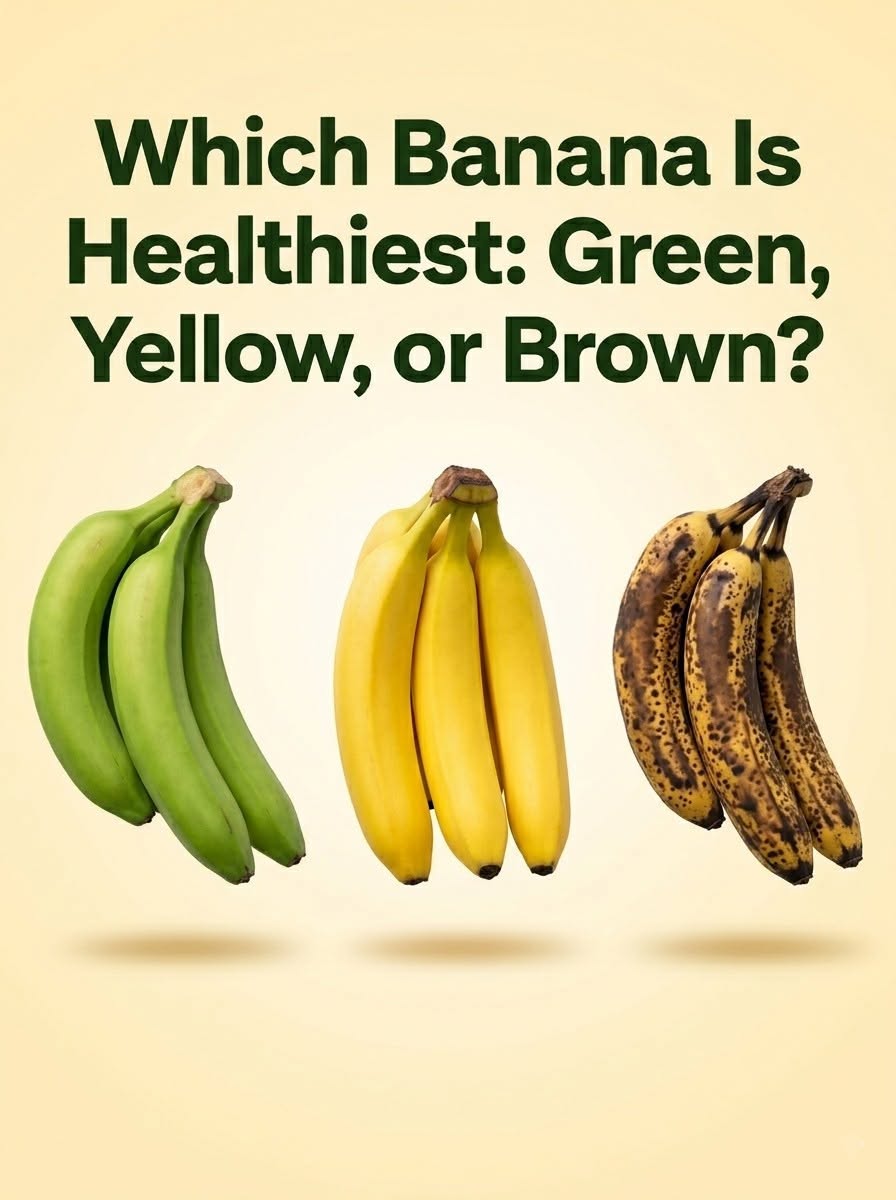
Green bananas contain more resistant starch, while ripe bananas contain more readily digestible sugars. Consequently, a ripe banana can raise blood sugar more quickly than a greener one.

That doesn’t mean people concerned about blood sugar must avoid ripe bananas.

Portion size and what you eat with the banana also matter.

Someone who wants a sweeter pre-workout snack may prefer a yellow banana, while someone focusing on lower-sugar choices may prefer one that is still slightly green.

Which Banana Is Best for Digestion?

This depends on the individual.

The resistant starch in less-ripe bananas can act as a fuel source for beneficial gut bacteria. However, green bananas can also cause digestive discomfort in some people.

Riper bananas are softer and generally easier to digest, which may make them more appealing to people who don’t tolerate very starchy foods well.

So instead of asking which stage is universally “best,” it makes more sense to ask:

Which stage feels best for your digestive system?

Don’t Throw Away Every Brown Banana

A banana covered in brown spots may not look appealing as a snack, but it can still be perfectly useful in the kitchen.

Try adding ripe bananas to:

  • Smoothies
  • Oatmeal
  • Pancakes
  • Homemade muffins
  • Banana bread
  • Yogurt
  • Breakfast bowls

The extra sweetness can also allow you to reduce added sugar in some recipes.