Which Banana Is Actually the Healthiest

Yellow Bananas: A Convenient Middle Ground

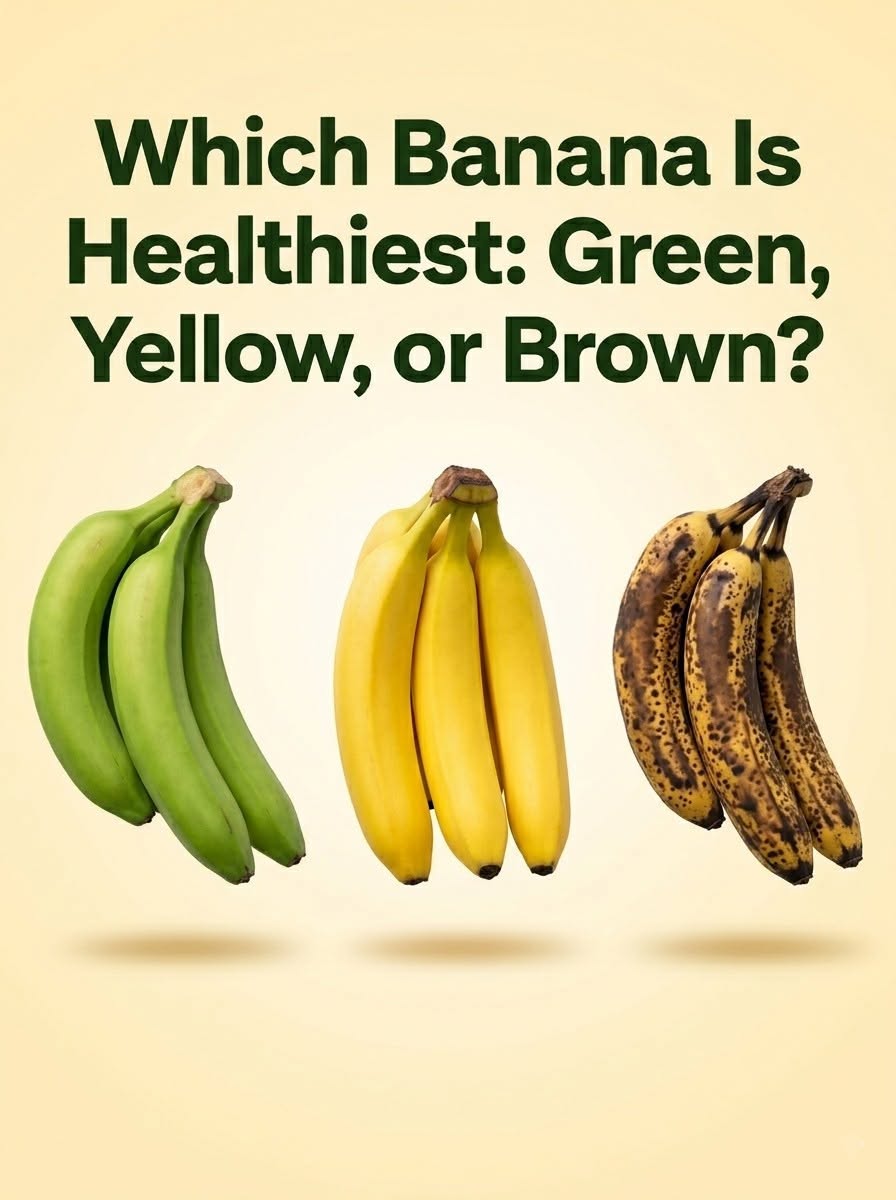
As a banana ripens, much of its starch is converted into sugars.

That is why yellow bananas taste noticeably sweeter and have a softer texture than green ones.

For many people, a yellow banana is the easiest everyday option. It provides carbohydrates for energy while still contributing fiber, potassium, and other nutrients.

A banana can also be paired with a source of protein or healthy fat—such as yogurt, nuts, or nut butter—to make a more filling snack and moderate the overall effect of the meal on blood sugar.

Brown-Spotted Bananas: Sweeter and Softer

Once brown spots begin appearing, the banana is further along in the ripening process.

At this point, more of the starch has been converted into simple sugars, making the fruit sweeter and softer. This can make a ripe banana particularly useful for smoothies, oatmeal, and baking.

However, it doesn’t mean that a brown-spotted banana is automatically “healthier” than a green or yellow banana.

Instead, each stage has different characteristics.

If you prefer sweeter fruit or want something soft and easy to eat, a ripe banana may be your favorite.

Which Banana Is Best for Blood Sugar?

Ripeness can matter.